Bone Health Index

60% of fracture patients have normal bone density.
Current screening misses every one of them.

The Bone Health Index extracts fracture risk from CT scans patients already have — combining bone density, muscle mass, muscle quality, and metabolic markers into a composite risk score that tracks over time. No new imaging. No added cost. No workflow disruption.

BMDMuscleVATBHI v2.1L1–L50691TMulti-domain
$57B+

Annual cost of osteoporotic fractures in the US

Milliman Research Report, 2018

60%

Of fracture patients have normal bone density by DEXA — invisible to every currently cleared tool

30M

Abdominal and pelvic CTs performed annually in the US, already containing the fracture risk signal

Different Question.
Different Category.

Every cleared competitor answers one question: does this patient have low bone density? Quasar answers a different one: will this patient fracture, and how is their musculoskeletal health changing over time?

ProductFDA ClearedMulti-DomainLongitudinalOutput
Bunkerhill BMDYes (Sep 2025)NoNoBinary BMD Flag
Naitive OsteoSightYes (Sep 2025)NoNoBinary BMD Flag
Stanford Comp2CompYesNoNoBMD Classification
Siemens AI-RadYesNoNoFracture Detection
Quasar BHIPatent FiledYESYESComposite Risk Index

Provisional patent #63/915,972 covers phantomless calibration and multi-domain fusion.

Six Steps. Zero Workflow Disruption.

01
Scan Identification

Eligible abdominal and pelvic CT scans are automatically flagged from the existing imaging workflow. No additional ordering required.

02
Phantomless Calibration

Measurements are standardized across GE, Siemens, Philips, and Canon scanners without external phantom hardware — eliminating the biggest barrier to opportunistic screening at scale.

03
Segmentation

Neural networks isolate vertebral bodies, skeletal muscle, and visceral fat in under 60 seconds across diverse patient populations and scan protocols.

04
Multi-Domain Fusion

Bone density, muscle volume, muscle quality, visceral/subcutaneous fat ratio, and vertebral compression fracture status are combined into a single composite index — capturing the osteosarcopenic obesity phenotype that single-domain tools cannot replicate.

05
BHI Score and Trajectory

The composite index is output with longitudinal tracking across scans — showing not just where a patient is, but where they are heading.

06
Referral Routing

Flagged patients are routed to the appropriate downstream specialist with a curated referral queue, creating a direct pathway from screening to intervention.

Three Commercial Pathways
From the Same Scan

Health Systems and Radiology Groups

Converts existing CT volume into a preventive care signal. No new equipment. No new patient scheduling. Integrates with existing PACS and EHR workflows — intelligence added to the scan that was already ordered.

Payers and Insurers

Measurable fracture prevention at population scale. BHI identifies high-risk members before a fracture occurs — enabling earlier intervention and reducing the $57B annual cost burden that falls on health plans and patients alike.

Pharma and Life Sciences

Identifies treatment-eligible patients before their first fracture — the highest-value moment in the care pathway. Enables pre-fracture patient identification at scale and real-world evidence generation linked to imaging biomarkers.

Clinical Credibility.
Technical Depth. Commercial Execution.

Bevan Smith
Bevan Smith
Co-Founder and CEO

Global risk and transformation executive with experience operating at scale. Architected and filed provisional patent #63/915,972 (26 claims) covering phantomless calibration and multi-domain fusion. Bringing institutional rigor to clinically grounded healthcare AI designed for real-world deployment.

Bruce Smith
Bruce Smith
Clinical Co-Founder

NHS Consultant Radiologist and Clinical Lead with dual fellowship training in South Africa (FCRad) and the UK (FRCR). A practicing clinician and published researcher focused on improving patient outcomes through clinical rigor. Guides validation and workflow integration.
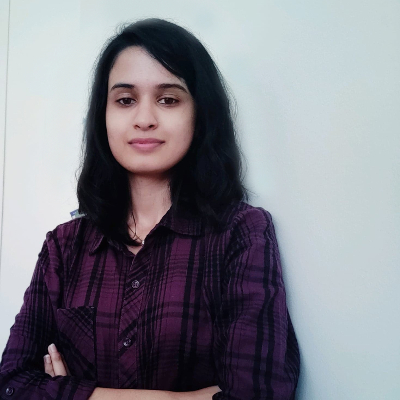
Ashuta Bhattarai
Ashuta Bhattarai
ML Engineering Lead

PhD-trained researcher specializing in deep learning, computer vision, and medical image analysis. Published at MICCAI 2024. Designed and implemented CNN and transformer-based models for real-world medical imaging, and built the BHI technical pipeline end to end.

Provisional patent filed November 2025 — 26 claims covering phantomless calibration and multi-domain fusion

Pipeline validated on published benchmark dataset — AUC 0.71 achieved (bone-only); multi-domain architecture targets improvement over published 0.827 baseline

Advanced to final evaluation stage with a leading US academic medical center — October 2026 program start

Start a conversation.

Whether you are a health system, payer, researcher, or investor — we want to hear from you.

The signal is in the scan.

Let's find it together.